Supreme Court Hears Arguments in Solar Dispute
By Cynthia Drummond for BRVCA
March 6th 2026
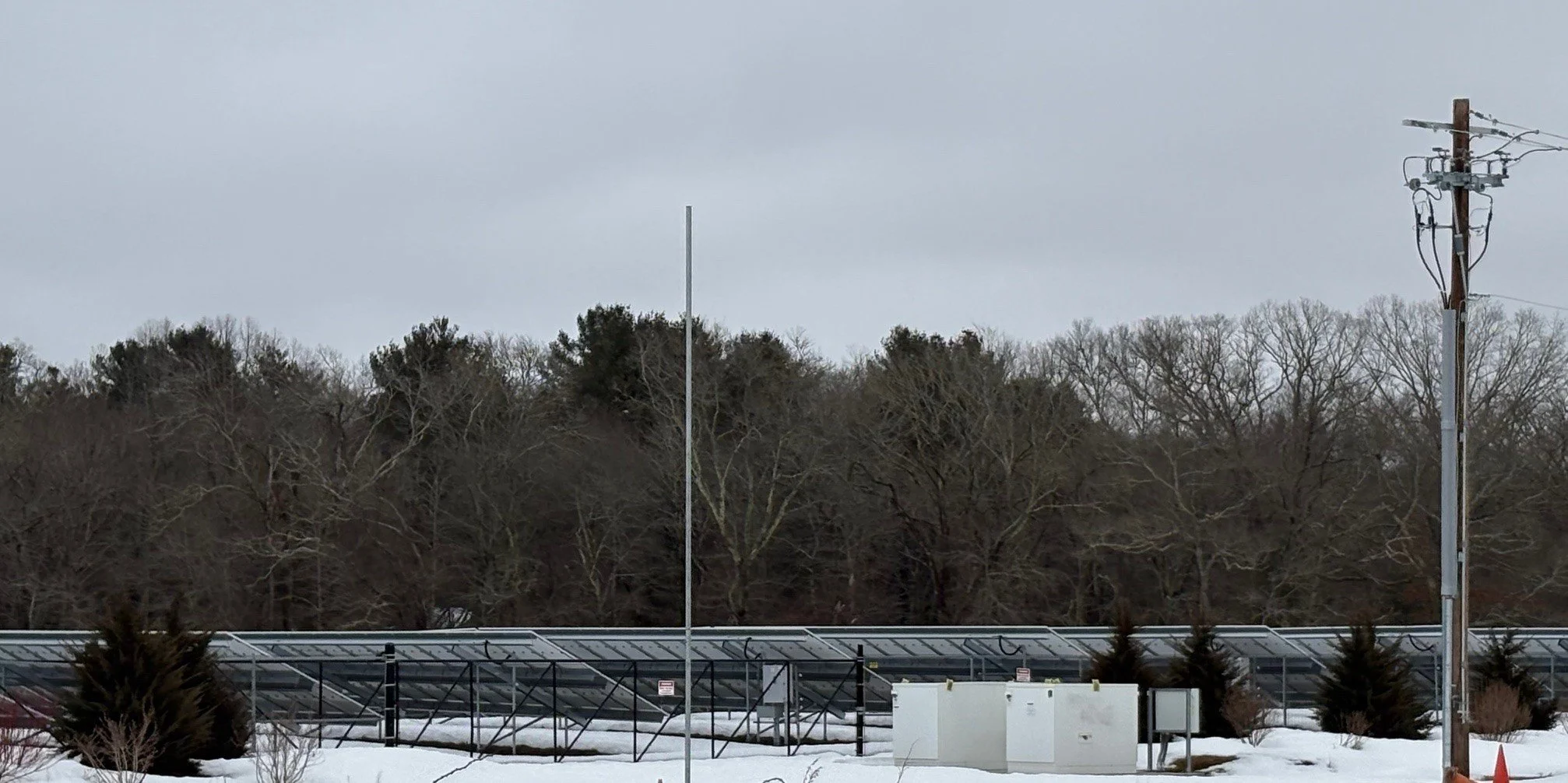
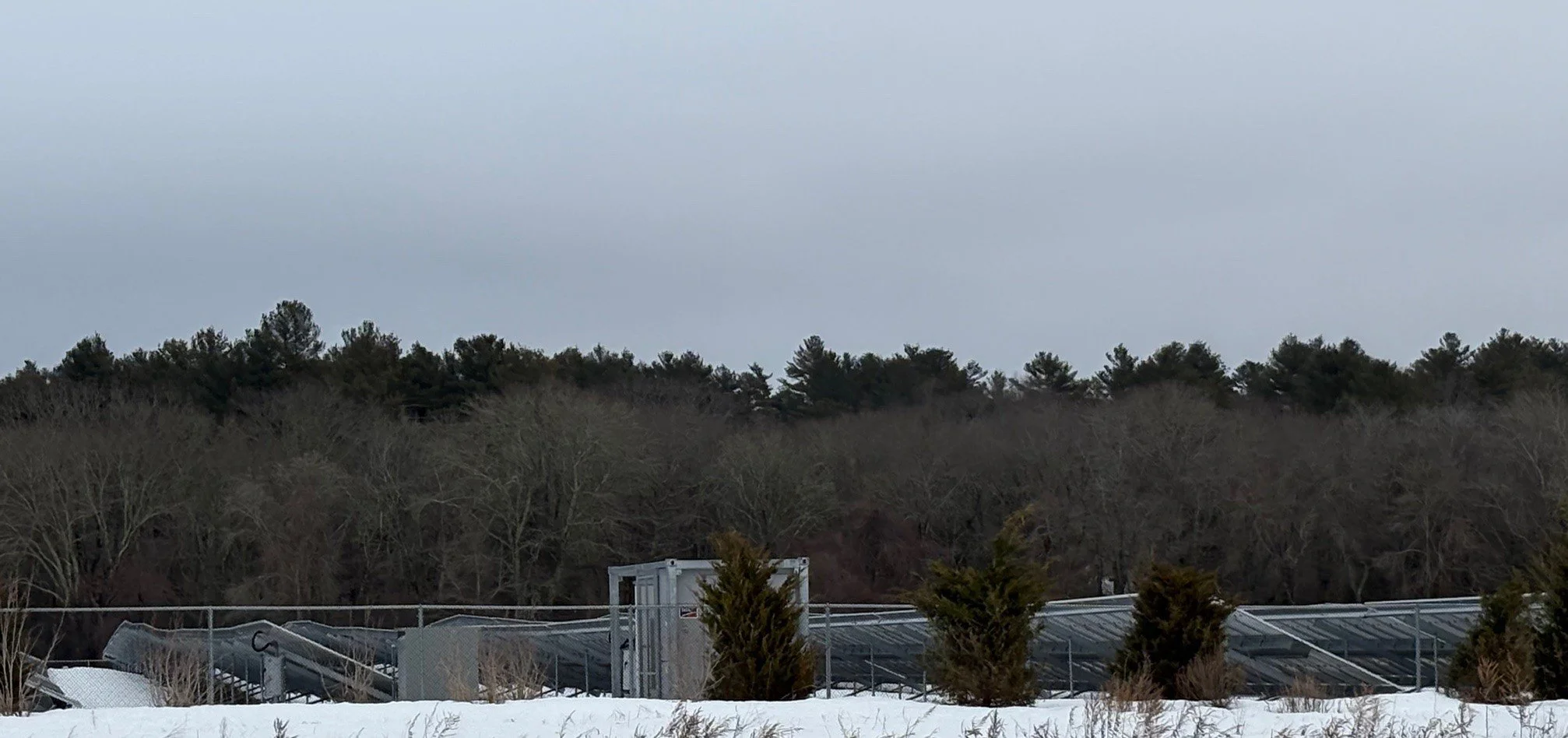
PROVIDENCE – The Rhode Island Supreme Court heard oral arguments on Thursday in the case of a large solar energy facility on Beaver River Road.
Opponents of the project, in this case, the Town of Richmond and an abutting property owner, asked the Supreme Court to reexamine and overturn a decision in 2023 by Superior Court Justice Sarah Taft-Carter, directing the Richmond Zoning Board to issue a special use permit allowing the project, submitted by GD Beaver River LLC, to be built.
While under appeal, Green Development began and completed construction of the solar energy facility.
In June, 2023, the abutter, John Peixinho, represented by attorney Tom Dickinson, and Karen Ellsworth, the Richmond Town Solicitor at the time, each submitted a petition for a Writ of Certiorari, which asked the Supreme Court to review the lower court decision. The Supreme Court granted the writs in April 2024 and heard the oral arguments on Thursday.
The attorneys appearing before the court on Thursday were Tom Dickinson for Peixinho, Kathleen Daniels, for the Town of Richmond, and John Mancini for the developers, GD Beaver River, LLC, which is owned by Green Development, and William Stamp the owner of the former field where the facility was built.
The Project Historic Location
The solar array is located on Beaver River Road, which, in 2021, was added to the National Park Service’s National Register of Historic Places, and the Beaver River is part of the federally-designated Wild and Scenic Rivers System.
Neither of those national designations prevented the developer from moving ahead with the project.
Peixinho, who purchased and restored the historic Samuel Clark farm on Lewiston Avenue, has fought to protect the Beaver River Valley from industrial solar development. The farm, which includes one of the oldest timber frame houses in Rhode Island, is also on the National Register of Historic Places.
Project History and Approval
GD Beaver River and William Stamp first applied in 2018 for a special use permit, which was required because the property, at 172 Beaver River Road, is in a low-density residential, or R-3 zone.
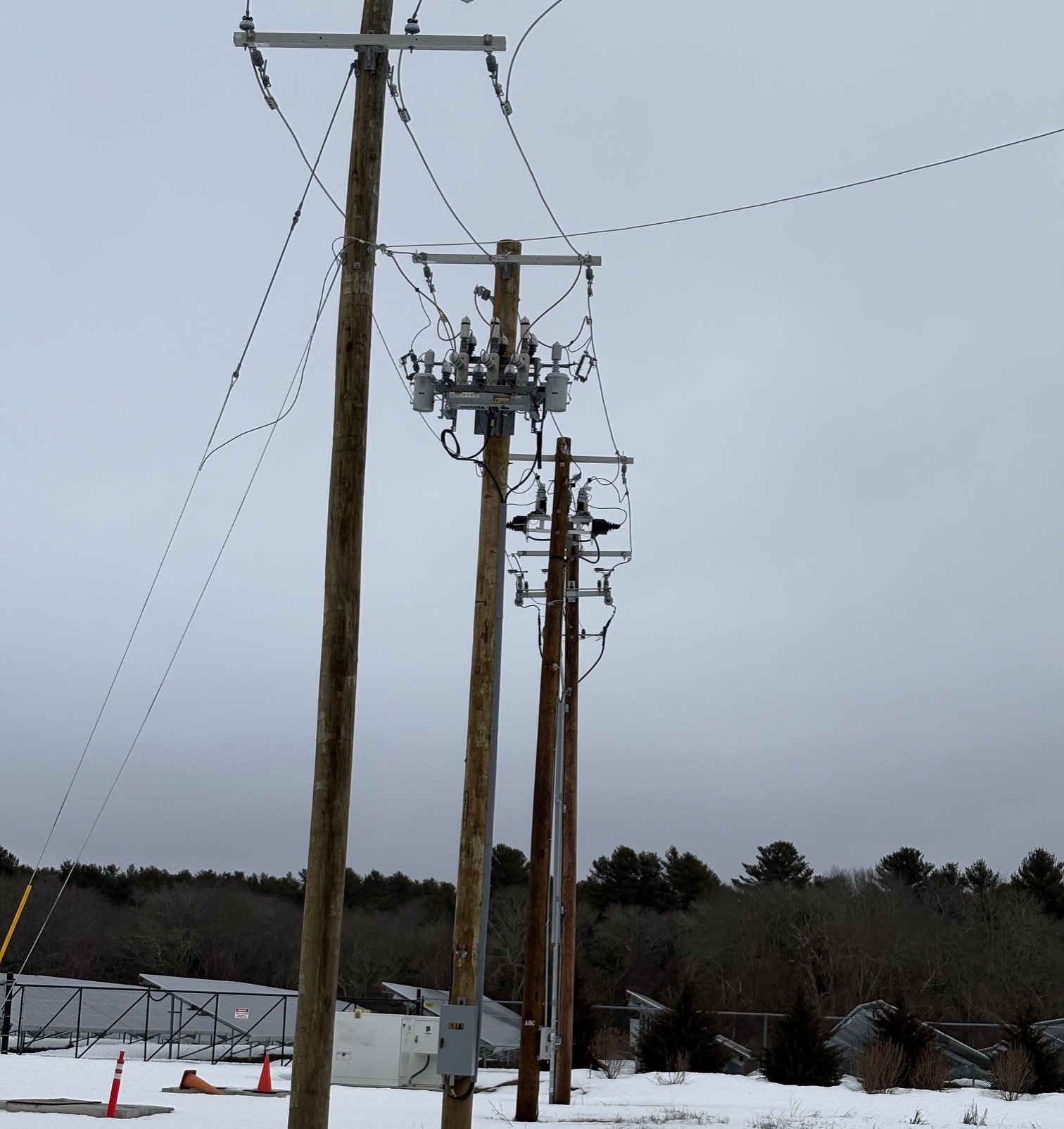
Russel “Bo” Brown, the zoning official at the time, denied the application, because the project did not meet a town requirement that solar arrays be no more than two miles from a utility substation.
The application was also denied by the Planning Board, because the proposed facility would not be consistent with provisions in the town’s comprehensive plan that protect the town’s rural landscapes and cultural and historic heritage.
GD Beaver River appealed the Zoning Board decision to Superior Court, which remanded the case to the Zoning Board. When the board denied the application a second time, the developers appealed once more to Superior Court, and this time, they won. Justice Taft-Carter ruled that the Zoning Board’s reasons for denying the application were “unsupported” and directed the town to immediately issue the special use permit.
The Oral Arguments
The parties disagree on two issues: whether the facility was, in fact within two miles of a substation, and whether the project is compatible with the town’s comprehensive plan.
Kathleen Daniels presented the town’s argument.
“Not only did the court overlook the evidence that was in the Planning Board’s record, the Planning Board’s conclusions, but the Superior Court also misconceived the law by ignoring two legal predicates,” she said. “One is is…that the Planning Commission findings may be considered evidence. The second is the fact that zoning boards do not observe strict evidentiary rules when accepting evidence and rendering decisions and findings. By stating that the conclusion was based on a speculative statement by the Town Planner, the Superior Court simply ignored the fact that they could rely upon the Planning Board’s findings and conclusion, which specifically incorporated or specifically referenced the letter by the Commission of Historic Places [Rhode Island Preservation and Heritage Commission] and also the fact that strict rules do not apply.”
Chief Justice Paul Suttel asked,
“The Zoning Board is required, are they not, to refer this to the Planning Board as part of the process?”
“They are,” Daniels replied, before making her argument on the second point, which concerns the vegetated buffer planted to mitigate the visual impact of the solar panels.
Justice Taft-Carter had concluded that the town’s zoning ordinance required a buffer.
“The problem with that conclusion is the ordinance also requires the finding of consistency with the comprehensive plan, and the Zoning Board’s problem with the vegetative [sic] buffer wasn’t the size, it wasn’t the location,” Daniels said. “It was consistent with what the Planning Board found, with the pastoral setting of this, was going to be plopped right in the middle of a field and was going to look out of place, and the whole comprehensive plan requires the town to identify and protect scenic rural landscapes and keep cultural, historic resources.”
So, the issue, Daniels concluded, was that the buffer was also required to be consistent with Richmond’s comprehensive plan, which it is not.
“I just respectfully ask that this court reverse the judgment of the Superior Court,” Daniels said. “…Placing a vegetative [sic] buffer would be out of place, such that it would be inconsistent with the comprehensive plan and maintaining the rural character and cultural, historical aspect.”
Thomas Dickinson, representing Peixinho, spent considerable time addressing the issue of whether the Superior Court Justice had erred in defining the term “within” regarding the distance of the solar facility from a substation.
“Essentially, the controlling language here is language within the zoning ordinance that requires solar a solar energy system shall be within two miles of a utility substation,” he said. “And that same ordinance defines a solar energy system that consists of a ground mounted solar panel array and its associated structures and components.”
Dickinson then considered the question of the definition of the word “within.”
“A solar energy system is defined as, like I said, the whole kit and kaboodle, in the ordinance, and the word ‘within’ the dictionary that the trial Justice selected, says ‘enclosure or containment.’”
Justice Melissa Long said,
“So, Mr. Dickinson, does that mean that you can read this in different ways and therefore, there’s ambiguity, and then we have to look to our rules of construction around ambiguity?” she asked, noting that in the case of ambiguity, “then you’ve got to construe it in favor of the landowner.”
Dickinson replied,
“I think we’re going to see, in cases as they go along, is what the Supreme Court and what the federal court are doing is what this court has been doing all along, which is, not a slavish adherence to what the administrative agency says, but a recognition and acknowledgment of the administrative agency and their interpretation, and some deference to it.”
There was, Dickinson insisted, no ambiguity.
“It isn’t ambiguous,” he said. “It’s two different interpretations, but it’s not ambiguous when it’s put in the context of the whole ordinance.”
John Mancini presented the developer’s arguments.
“The R-3 zone is essentially three-acre zoning, and it allows for solar energy systems to be permitted by special use, and special use is exactly that. It’s special,” he said. “It allows for an exemption from what would be permitted and what would be not permitted. And the special use exemption also comes with specific criteria that the town has to establish for the Zoning Board to review and determine whether or not the special use should be granted.”
A solar energy system, Mancini said, is not a single entity but rather, a collection of components, including wires.
Justice Erin Lynch Prata asked,
“Are you saying, Mr. Mancini, that those wires are inclusive of the system, are part of the system, and therefore, it would be impossible for a system to be within a two-mile [distance]?”
Mancini responded that the solar energy facility was made up of many different components and therefore could not be “dropped into containment.”
“And that’s where the distinction arises, as to when the word ‘within’ can be used as containment and when the word ‘within’ can be construed as in proximity of, or in range of, and I think that was the distinction the Superior Court was making,” he concluded.
Justice William Robinson asked,
“Mr. Mancini, isn’t that overcome by the specific definition in the ordinance: ‘ground mounted solar panel energy and its associated structures and components’ - that’s a very concise and rather specific definition.”
Regarding the Zoning Board’s decision that the project would not be compatible with the town’s comprehensive plan, Mancini described the testimonies of five land use experts, all of whom found that the facility would not be incompatible. Editor’s note: It should be noted that, as is common in development applications, the experts were paid to testify in support of the project.
Justice Robinson asked,
“You go through all the improper, and inadmissible, perhaps, speculation, aren’t they also to rely upon their personal knowledge of the historic nature of the community, its pastoral qualities and the those features that they have lived with over the years?”
“They are, Your Honor, but in this instance, you have a conditionally permitted use, and the conditionally permitted use is already determined to be harmonious with the comprehensive plan,” Mancini replied.
Robinson appeared unconvinced.
“Don’t they have the discretion to say ‘yes, it is permitted by special use, but in this particular lot, where they define it as historically valuable, scenic value, it’s eligible for registration even if it’s not in a historic district?” he asked.
Mancini concluded that “the applicant followed the prescribed standard in the town zoning ordinances. The town’s zoning ordinances permitted this use initially, subject to a special use permit, the applicant in following the ordinance, presented all the evidence it needed to do so in order to satisfy the record that the special use permit should be granted, and I think the Superior Court was correct in granting the special use permit, reversing the errors of the Planning Board and Zoning Board of the Town of Richmond and for those purposes, we think the decision should not be disturbed.”
Post-Hearing Reaction
Dickinson said he was satisfied with how his arguments had been received.
“On our side, we were able to make the arguments pretty clearly,” he said. “We got questions that were good questions, and I think we answered them well, and I’m very hopeful that the court’s going to come out our way.”
Peixinho agreed that the Justices had asked good questions.
“I thought the Justices were extremely well-prepared for the case and asked some very difficult questions of both sides,” he said. “I felt that my attorney, Tom Dickinson, did an excellent and highly professional job. Attorney Mancini, however, I disagreed with almost everything he said. He tried to claim that the Planning and Zoning Boards’ criteria for inclusion of the area on the National Register was based on whim and conjecture, which is simply not true. The Beaver River Agricultural area has been clearly designated as worthy of consideration for inclusion by the Secretary of the Interior since at least 1977, when the first historic survey report for Richmond was completed by the state preservation office.”
Peixinho also took issue with Mancini’s statements pertaining to the vegetated buffer around the facility.
“Mancini also focused much of his argument on testimony related to the construction of a ‘vegetated buffer,’ which seemed like a real distraction,” he said. “I wish the court could see the reality of this buffer today. It is a complete failure — nothing but a few thin, dead evergreens and some wood chips. Even if it was a of a relevant scale, how can the town really monitor and enforce proper planting and regular maintenance?”
Peixinho ended his comments with a reminder of the continued and pervasive community resistance to the project.
“One thing was really underscored again for me, based on the testimony and questions, and that is: Richmond residents do not and have not wanted this solar installation for a long time,” he said. “For the sake of our community, and our historic structures, landscapes, and view sheds, I sincerely hope the court rules in our favor.”
What Happens Now?
The Supreme Court Justices will discuss the case and issue an opinion. One of the Justices will be chosen to write the opinion, which will likely be issued in May, or even later.
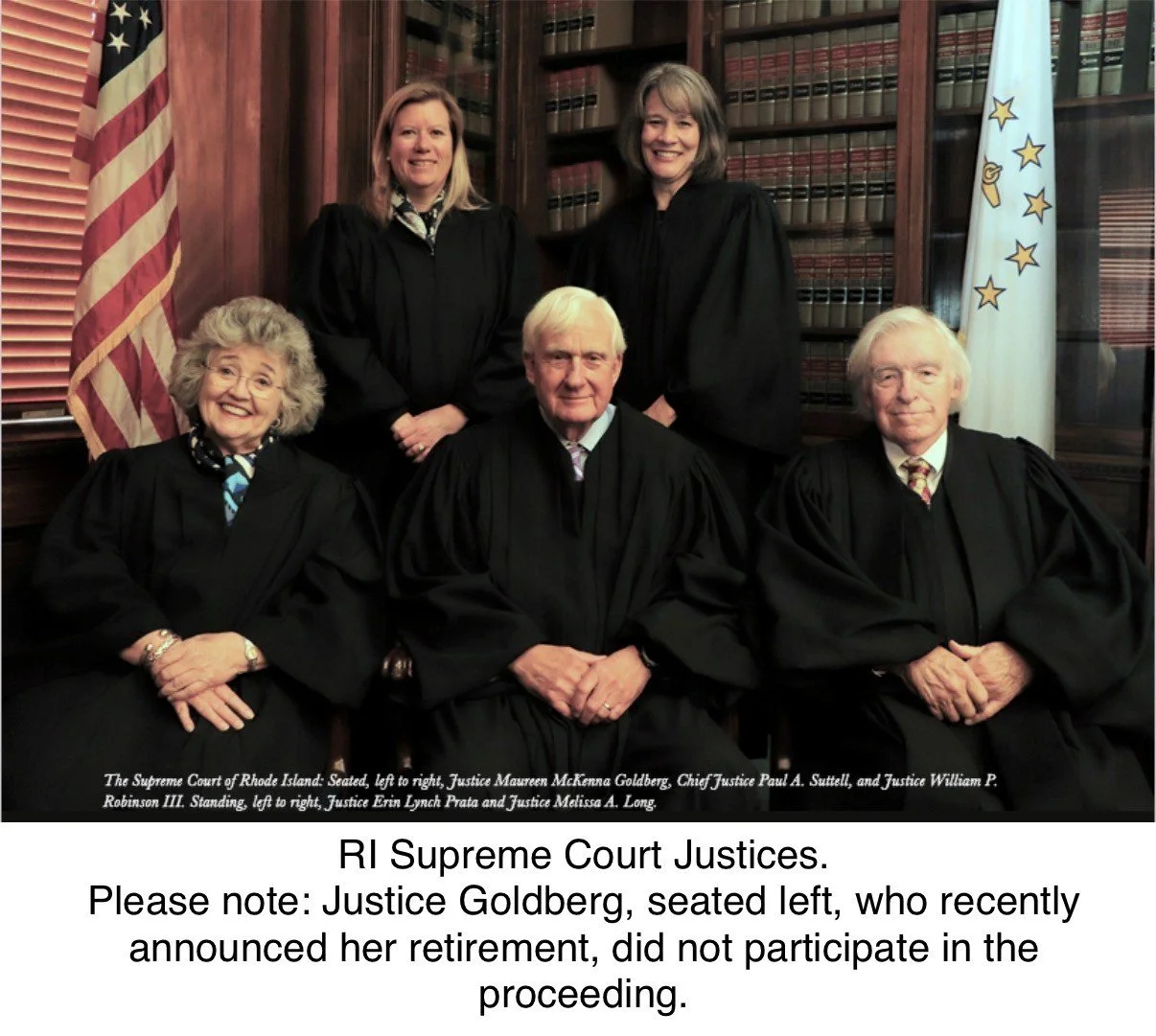
There is no further appeal of the decision, which could be complicated by the absence of Justice Maureen McKenna Goldberg, who was not present for the oral arguments and is retiring soon. That left four Justices to hear the arguments, and the possibility of a tie, which would result in either a new Supreme Court hearing once a new Justice has been appointed, or, the Superior Court decision will stand.