
Council Approves New Camp
By Cynthia Drummond for BRVCA
February 5th 2026
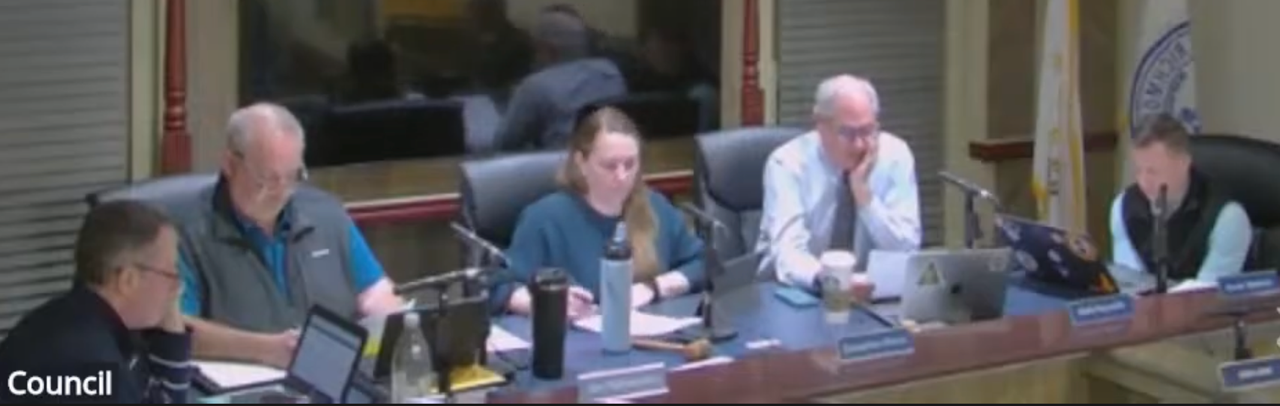
RICHMOND – Members of the Town Council approved the creation of a new spring vacation camp. Also at the Feb. 3 meeting, the council discussed surveys of residents and heard reports from the Economic Development Commission and the Land Trust.
The council also heard a report from Rep. Megan Cotter, D-District 39, regarding state legislative initiatives in 2026.
The New Camp
Recreation Director Robin Woodmansee asked the council to approve posting job openings for one leader and a team of counselors for the town’s first April Vacation Camp.
“One of the things we’ve heard from our residents is, it’s hard to find childcare during the school breaks,” she told the council. “February break is a little too quick to get that done, so we’re working on April.”
The camp participants, about 50 children in the first year, would be in Grades K to 5. The camp would run from April 20 to April 24, with the hours still to be determined, based on the camp location, which has not been finalized.
“I’m still working to secure a location,” Woodmansee said. “I will say we have secured the Richmond Carolina Fire Station, if need be. I am working with the school department as well, to try and secure Richmond [Elementary School] and, if not Richmond, then another location.”
Woodmansee said the cost of the new camp would be covered by funds remaining in the recreation department budget and camp fees, which will be similar to the fees for the town’s summer camp.
The council approved a motion for the hiring of seasonal staff for the April camp.
Economic Development
Economic Development Commission Chair, Gary Parker, presented a report on the commission’s initiatives in 2025.
Those projects include the creation of Richmond economic town map.
Councilor Dan Madnick asked when the map would be completed and Parker replied that it was an evolving document that would never be finished.
“We started mapping out where the businesses are. It’s just a matter of collecting that information,” he said. “…The idea would be it would really be an EDC tool, rather than something that will be presented, because it’s always changing.”
The EDC has also joined the Ocean Community Chamber of Commerce, and has met with the federal Small Business Administration, the Westerly Credit Union and several commercial real estate developers.
Parker’s report also notes the discussion of a possible Richmond ice festival and outdoor ice-skating rink,
however, the key to boosting the economy, he said, will be targeting and promoting local entrepreneurs.
“Our other line of effort, and this is executable, is to find our entrepreneurs, and so, we really just start going at it, meeting people and really trying to find who are the small farmers, who are the folks that are selling flowers off the end of their driveway?”
Councilor Jim Palmisciano said he was pleased to see the commission’s activities and accomplishments over the past year.
RICH Taskforce
Recreation Commission Chair Andrew Pezzelli presented a report on the activities of the Richmond Task Force for Commercial Health, or RICH. Established in 2025, the task force includes, in addition to Pezzelli, Town Council members Jim Palmisciano and Jeffrey Dinsmore, Planning Board Chair Phil Damicis, EDC member Joseph Taormina and Zoning Board member Raymond Cox III.
“We have to determine a strategy for how Richmond can achieve growth by design while retaining a culture and community centered on historic experience,” Pezzelli told the council. “This discussion led to the realization that Richmond as a whole lacked its own defined identity, not from a lack of town pride, but because often, it’s thought of as this collection of villages which we all know well: Carolina, Wyoming, Shannock, Hope Valley. … Trying to work against the grain and re-brand Richmond to the detriment of this village pride would be a mistake. Instead, we saw this perceived weakness as Richmond’s biggest strength, both for tying together the local population and for how Richmond can position and market itself into the future.”
Resident Surveys
The council continued its discussion of surveys of residents.
Palmisciano said that to prevent surveys from becoming an additional burden on town staff, Town Administrator Erin Liese would have the final say on whether a survey could be conducted.
“I just wanted to make sure that this wasn’t introducing an undue burden on any department and Erin has the ability to control the flow,” he said.
Town Council President Samantha Wilcox said residents would be more likely to complete shorter surveys.
“I understand that if you have a long survey, you’re less likely for people to take it, complete it and finish it, but that’s the risk the board is going to have to take if they want more questions.
Resident Dave Bengston suggested contacting Stephen Swallow, a resident and former University of Rhode Island professor of environmental economics with experience in conducting surveys.
“I thought it might be a good idea, if Steve is willing, for him to come in and offer a primer, on, like Survey 101,” he said. “What do you do to make sure the question that you are asking, or you think you’re asking, is being interpreted by the recipient in the way you think they’re receiving it.”
“That’s a great suggestion,” Wilcox said. “Thank you.”
Mountain Bikes on Land Trust Properties
Richmond Rural Preservation Land Trust Chair Suzanne Paton answered questions from the council regarding mountain biking trails on land trust properties.
Madnick asked whether the land trust could work with mountain bike groups.
“Recreation is really important for this community, and I don’t know if we have a bike map for the town and I thought that was a really great idea for the town, and obviously the Land Trust, that’s not really your purview,” he told Paton.
The Land Trust owns about 500 acres,” Paton said, “but many of the parcels are small – 20 acres – and a couple of smaller 12-acre parcels.”
“For the most part, a half a mile trail is not something that mountain bikers would want to drive to unless it’s connected to other locations,” she added. “I think it would just take a little bit of time to figure out which trails potentially would be ones that mountain bikers would really want to use, if they’re off-road. But I understood this goal is to maybe also include bike paths on the roads. Because a lot of our roads are really narrow and don’t have bike lanes, either.”
Paton and the council agreed to look into GIS mapping of Land Trust properties to determine whether there is a potential for mountain bike trails.
Megan Cotter
Responding to an invitation from the Town Council, Rep. Megan Cotter presented an overview of what the legislative season might bring.
“Obviously, school funding is always an issue,” she said. “The governor’s budget came out and Richmond is looking at a $330,000 decrease, which similarly happened last year. And then, we fight in the background for more funding. It is going to be a tight year. I want to be very clear with everyone that the goal is to equal what we got last year and not push for more.”
One bright spot in the education budget is the possibility of additional funding for regionalization.
“I do think that getting more funds for regional schools, that there’s a much greater opportunity now than there has been in the past,” Cotter said. “When schools dip below a certain enrollment level, they have to, by state law, look at what regionalization might look like. So, Narragansett, South Kingstown, Westerly, mostly southern Rhode Island, is looking at a huge decrease in enrollment, so there’s a lot more communities that are getting on board with the legislation that I’m putting in for the fourth year, so when that comes up, I’m hoping to see some town councilors come or write letters in support of that, because we certainly could use the additional funds.”
Reached Wednesday, Cotter explained that her bill calls for a 6% regionalization bonus which would apply not only to districts wishing to regionalize, but also to the state’s four existing regional school districts, including Chariho.
A Facelift for Town Hall
After thanking public works employees for their snow clearing efforts, Town Administrator Erin Liese asked and received Town Council approval to go out to bid for maintenance work on the exterior of the Town Hall.
Liese asked that the $14,000 remaining in American Rescue Plan Act, or ARPA funds, originally allocated for Town Hall renovations, be used to paint the building’s shutters and trim.
Liese also recommended soft washing the exterior of the building, but Dinsmore said the town didn’t need to pay a company to soft wash, adding that the work could be done by town employees in about a day.
Dinsmore and Palmisciano raised the issue of repairing the Town Hall parking lot, but Liese said she doubted the ARPA funds could be used for that purpose.
“That, I don’t believe we could fit into this scope, but it is part of our recommendation for capital budgets for Town Hall needs.”